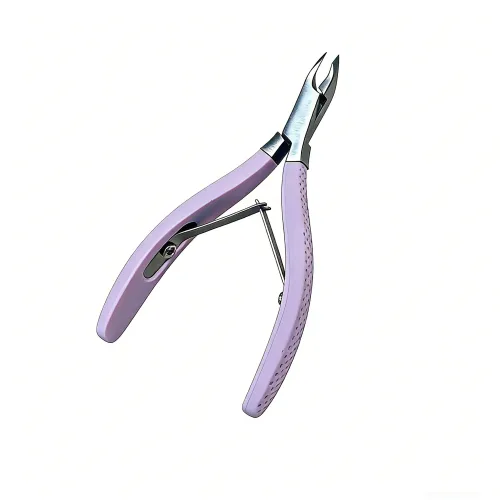
You might not realize it, but proper nail pre - treatment is the cornerstone of a long - lasting and beautiful manicure. It's like laying a solid foundation for a building. When you start with well - prepared nails, the subsequent nail art application adheres better, lasts longer, and looks more professional. For instance, a smooth nail surface ensures that nail polish or other nail products are evenly distributed, reducing the chances of peeling or chipping. Studies show that nails that undergo proper pre - treatment can make a manicure last up to 30% longer compared to those that don't.
Your double - sided multi - functional nail file comes with a three - grade grit design, which is a game - changer in nail care. The coarse grit is perfect for the initial shaping of the nail, whether it's a natural nail, an acrylic nail, a gel nail, or a wearable nail piece. It can quickly remove excess length or reshape the nail in just 2 - 3 strokes. The medium grit is then used to smooth out the rough edges left by the coarse grit, providing a more refined surface. Finally, the fine grit is for the finishing touch, giving the nail a polished and smooth look. This three - grade design allows you to handle different types of nails and achieve a high - quality result in a single tool.

Each grit has its specific application scenarios. For natural nails, you may start with the coarse grit if you need to shorten the nail significantly, then move to the medium and fine grits for a smooth finish. Acrylic nails, which are more brittle, require a more gentle approach. You can use the medium grit more often to avoid cracking. Gel nails, on the other hand, need a fine - touch finish, so the fine grit is often the most used for these types of nails. Wearable nail pieces can be shaped according to your preference, and the three - grade grit design allows you to customize the shape and smoothness.
One of the most critical aspects of using the nail file is the grip angle and operation force control. Holding the file at the wrong angle can cause uneven filing and even damage to the nail. You should hold the file parallel to the nail surface when filing the edges, and at a slight angle when filing the top surface. This ensures that the filing is even and the nail is not over - filed.
As for the operation force, you should apply just enough pressure to achieve the desired result without causing damage. For example, when using the coarse grit, you can apply a bit more force, but still be gentle. When using the fine grit, a light touch is all you need. Remember, the goal is to shape and smooth the nail, not to cause pain or damage to the client's nail.
Based on real feedback from nail technicians, there are several common mistakes in nail filing. One of the most common is over - filing, which can lead to thin and weak nails. Another mistake is using a worn - out file, which can cause more damage than good. To avoid these mistakes, you need to be aware of the signs of a worn - out file. A file that has lost its sharpness or has a lot of debris stuck in it should be replaced. On average, a high - quality nail file can last for about 20 - 30 uses, depending on the frequency and intensity of use.
To protect the client's nails, you should also follow some scientific protection measures. For example, you can use a nail buffer after filing to smooth out any remaining rough spots. You can also apply a nail strengthener to protect the nail from further damage. These measures not only protect the client's nails but also enhance the overall quality of your nail service.
Knowing when to replace your nail file is crucial for maintaining the quality of your nail service. You can judge the tool life by looking at the grit. If the grit is no longer sharp or if there are visible signs of wear, it's time to replace the file. Another way is to test the file on a spare nail piece. If it doesn't file as smoothly as it used to, it's a sign that the file is worn out.
To use the file more efficiently, you can clean it regularly with a brush to remove debris. You can also store it in a dry and clean place to prevent rust or damage. These small tips can help you get the most out of your nail file and provide a consistent and professional service to your clients.
Let's look at some practical scenario cases to better understand how to use the nail file. Suppose you have a client with natural nails that are too long and uneven. You start by using the coarse grit of the nail file to shorten the nails to the desired length. Then, you use the medium grit to smooth out the edges. Finally, you use the fine grit to give the nails a polished look. By following these steps, you can achieve a beautiful and long - lasting manicure.
Another case is when you have a client with acrylic nails that need reshaping. You need to be more careful with the filing process to avoid cracking the acrylic. You can use the medium grit more often and apply less force. After reshaping, you can use the fine grit to give the acrylic nails a smooth finish.
Are you ready to take your nail filing skills to the next level? Click here to explore more about our high - quality double - sided multi - functional nail files that meet international safety standards and offer excellent durability. Have you encountered any nail filing problems in your work? Share your experiences in the comments below!

 88
|
88
|
 matte nail polish tutorial
nude nail polish recommendation
home nail DIY skills
quick - dry nail polish
nail polish for sensitive skin
matte nail polish tutorial
nude nail polish recommendation
home nail DIY skills
quick - dry nail polish
nail polish for sensitive skin
 337
|
matte nail polish tips
professional nail artist guide
nude matte nail polish application
fast drying nail polish
salon efficiency techniques
374
|
cosmetics export compliance
international cosmetics regulations
B2B market entry
EU CE certification
US FDA cosmetics requirements
116
|
cosmetic export compliance
EU CE certification
FDA cosmetic regulations
B2B cosmetics market
international cosmetic safety standards
302
|
international certified nail tools
nail buffer safety standards
nail buffer durability testing
authentic nail tool verification
bulk nail tool procurement
337
|
matte nail polish tips
professional nail artist guide
nude matte nail polish application
fast drying nail polish
salon efficiency techniques
374
|
cosmetics export compliance
international cosmetics regulations
B2B market entry
EU CE certification
US FDA cosmetics requirements
116
|
cosmetic export compliance
EU CE certification
FDA cosmetic regulations
B2B cosmetics market
international cosmetic safety standards
302
|
international certified nail tools
nail buffer safety standards
nail buffer durability testing
authentic nail tool verification
bulk nail tool procurement