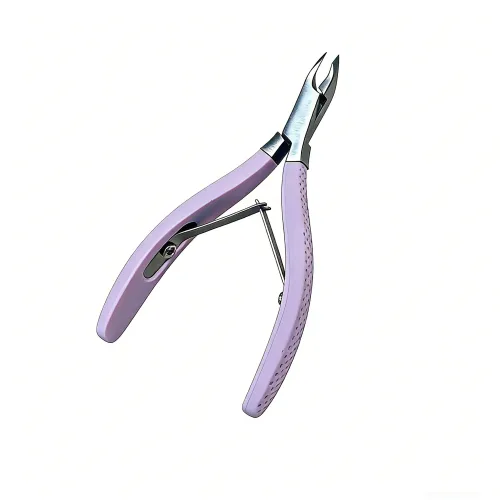
As a nail technician, you know that the pre - treatment of nails is crucial for the subsequent nail art effect. Proper nail surface treatment can save time, enhance the adhesion of nail polish or other nail products, and avoid damage to the nails. Before you start any nail art procedure, a well - executed pre - treatment sets the foundation for a long - lasting and beautiful manicure.
There are three grades of sand grains for nail files: coarse, medium, and fine. Each grade has its own role in different nail types. For natural nails, you usually start with a coarse - grit file to remove any rough edges or calluses. Then, move on to a medium - grit file for a more refined surface. Finally, use a fine - grit file for a smooth and polished finish. For artificial nails, gel nails, and wearable nail tips, the same general principle applies, but the specific operations may vary slightly.
Coarse - grit files are great for quickly shaping and removing large amounts of material. Medium - grit files are used for smoothing out the surface after the initial shaping. Fine - grit files are for the final polishing, giving the nails a shiny and smooth look. The key is to follow the correct order: coarse → medium → fine.

To achieve the best polishing effect, you need to pay attention to how you hold the file, apply force, and move it. When holding the double - sided multi - functional nail file, hold it firmly but not too tightly. The ideal angle is about 45 degrees to the nail surface. Apply moderate pressure when moving the file. For the movement trajectory, a back - and - forth motion in a straight line is usually the most effective.
As you progress through the different grit levels, adjust your force and movement accordingly. For the coarse - grit file, you can apply more force, but be careful not to overdo it. When using the medium - grit file, reduce the force slightly, and for the fine - grit file, use a very light touch.
One of the most common mistakes is over - sanding. Over - sanding can damage the nails, making them weak and prone to breakage. Another mistake is ignoring the wear and tear of the file. You should regularly check the file for signs of wear, such as a decrease in cutting efficiency.
To protect the nails, you can use a nail strengthener or cuticle oil. Also, make sure to take breaks during the filing process to avoid over - stressing the nails. Real - life feedback from nail technicians shows that following these protection measures can significantly improve the health of the nails.
The double - sided multi - functional nail file has a service life of about 20 - 30 uses. After this number of uses, the file may lose its effectiveness, and you should replace it. You can tell it's time to replace the file when it no longer cuts smoothly or when the surface becomes clogged with nail dust.
Here are some practical tips to help you improve your efficiency. For example, when switching between different grit levels, clean the nail surface to prevent cross - contamination. Also, practice on dummy nails first to get a feel for the correct force and movement.
We encourage you to leave a message and share any common problems you encounter during the nail - filing process. Our community of nail technicians will be happy to help you out.

 99
|
99
|
 Internationally certified nail tools
Nail tool safety standards
Durability of nail grinding tools
How to distinguish genuine and fake nail tools
Nail buffing blocks recommended for nail technicians
374
|
cosmetics export compliance
international cosmetics regulations
B2B market entry
EU CE certification
US FDA cosmetics requirements
Internationally certified nail tools
Nail tool safety standards
Durability of nail grinding tools
How to distinguish genuine and fake nail tools
Nail buffing blocks recommended for nail technicians
374
|
cosmetics export compliance
international cosmetics regulations
B2B market entry
EU CE certification
US FDA cosmetics requirements
 485
|
ABS resin nail stickers
eco - friendly nail stickers
reusable nail stickers
nail sticker material analysis
long - style nail stickers
56
|
eco-friendly nail stickers
rhinestone nail art stickers
ABS resin nail贴片
long-lasting nail decals
international nail art exports
485
|
ABS resin nail stickers
eco - friendly nail stickers
reusable nail stickers
nail sticker material analysis
long - style nail stickers
56
|
eco-friendly nail stickers
rhinestone nail art stickers
ABS resin nail贴片
long-lasting nail decals
international nail art exports
 233
|
nail extension片 sizing
gel nail adhesive technique
jelly glue for nails
reusable nail贴片 care
professional nail extension training
233
|
nail extension片 sizing
gel nail adhesive technique
jelly glue for nails
reusable nail贴片 care
professional nail extension training