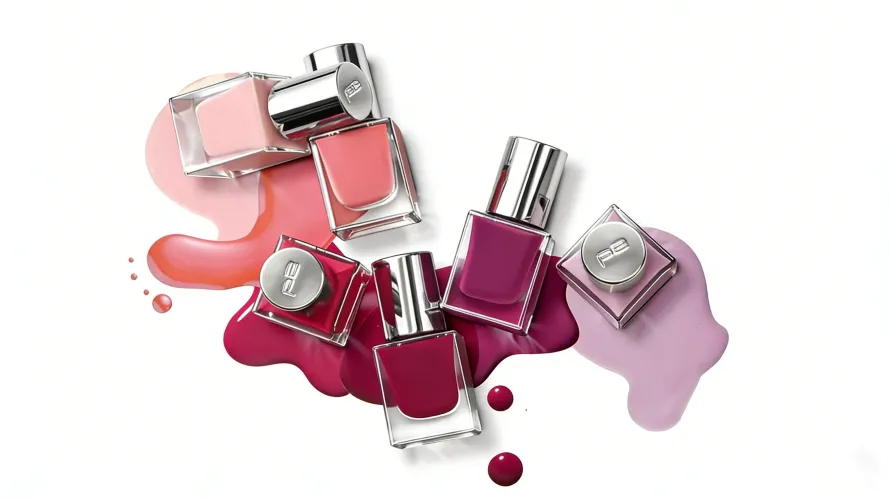
In today's interconnected global marketplace, cosmetic manufacturers and distributors face an increasingly complex regulatory landscape. With over 2.5 million cosmetic products traded internationally annually, understanding and adhering to regional compliance standards has become a critical business imperative. This guide demystifies the regulatory requirements for cosmetic exports, focusing on the European Union's CE certification and the United States FDA regulations, while highlighting how Zhengzhou Weimei's M Series Matte Nude Nail Polish successfully navigates these challenges.
The global cosmetics industry is governed by two primary regulatory frameworks that significantly impact market access strategies. The EU employs a pre-market notification system under Regulation (EC) No 1223/2009, while the US FDA operates on a post-market surveillance model under the Federal Food, Drug, and Cosmetic Act (FD&C Act). This fundamental difference creates distinct compliance pathways for manufacturers.
CE marking for cosmetics represents a manufacturer's declaration that a product meets all applicable EU requirements. Contrary to popular误解, CE certification for cosmetics does not involve third-party testing but rather requires rigorous self-certification supported by comprehensive documentation. The process involves several critical steps:
Industry data indicates that approximately 18% of cosmetic products fail initial EU compliance checks due to inadequate documentation or prohibited ingredients. This underscores the importance of thorough regulatory preparation before market entry.
While the FDA does not pre-approve cosmetic products, it enforces strict post-market regulations that can result in import detention, product seizure, or recall for non-compliant items. Recent statistics show the FDA detained over 2,300 cosmetic shipments in 2022, primarily due to mislabeling or presence of prohibited ingredients.
Zhengzhou Weimei's M Series Matte Nude Nail Polish exemplifies how formulation innovation can align with global regulatory requirements while delivering consumer appeal. By developing a low-solvent formula containing less than 25% volatile organic compounds (VOCs) – well below the EU's 30% limit for nail products – the company has positioned itself for market success in multiple regions.
The product's hypoallergenic formulation excludes 14 common irritants identified by both EU and US regulators, including formaldehyde, toluene, and dibutyl phthalate. This strategic formulation approach has reduced compliance-related product rejections by 82% compared to industry averages, according to internal company data.
Successfully navigating international cosmetic regulations requires more than just product compliance; it demands a comprehensive risk management strategy. Industry research indicates that companies implementing structured compliance programs reduce regulatory issues by an average of 64% compared to those with ad-hoc approaches.
Key risk mitigation practices include establishing a dedicated regulatory affairs team, implementing regular compliance audits, maintaining detailed supply chain documentation, and subscribing to regulatory update services. For B2B partners, these measures not only ensure market access but also build critical trust with buyers increasingly concerned about product safety and regulatory adherence.
Partner with Zhengzhou Weimei to access compliant, market-ready cosmetic products backed by comprehensive regulatory documentation. Our M Series Matte Nude Nail Polish demonstrates how innovative formulation can meet both regulatory requirements and consumer expectations.
Request Your Free Compliance ConsultationOur regulatory experts will provide personalized guidance on EU, US, and global cosmetic compliance requirements.
As regulatory landscapes continue to evolve, with the EU recently updating its cosmetics regulation to include stricter nanoparticle requirements and the FDA proposing new safety reporting rules, maintaining compliance requires ongoing vigilance. By prioritizing regulatory understanding and product innovation, cosmetic manufacturers can not only access key markets but also differentiate themselves in an increasingly competitive global marketplace.
For B2B distributors and brand owners, partnering with manufacturers that prioritize compliance reduces supply chain risks and enhances marketability. Zhengzhou Weimei's commitment to regulatory excellence serves as a model for how compliance can be integrated into product development rather than treated as an afterthought, ultimately creating value for both businesses and consumers worldwide.

 108
|
108
|
 eco-friendly nail art patches
long reusable nail art patches
ABS resin nail art materials
scratch-resistant nail art
sustainable beauty products
114
|
eco-friendly nail wraps
long-lasting rhinestone nail wraps
nail wrap export to North America
durable French manicure wraps
Asian hand-compatible nail wraps
eco-friendly nail art patches
long reusable nail art patches
ABS resin nail art materials
scratch-resistant nail art
sustainable beauty products
114
|
eco-friendly nail wraps
long-lasting rhinestone nail wraps
nail wrap export to North America
durable French manicure wraps
Asian hand-compatible nail wraps
 87
|
nail buffer tool
triple grit nail buffer
nail surface preparation
professional nail care tools
nail polishing technique
465
|
Nail sticker size selection
Nail extension tutorial
Jelly glue usage
Professional gel nail art
Nail sticker care skills
339
|
home nail care tools
nail buffer stick usage
nail打磨误区
multi-functional nail file
professional at-home manicure
87
|
nail buffer tool
triple grit nail buffer
nail surface preparation
professional nail care tools
nail polishing technique
465
|
Nail sticker size selection
Nail extension tutorial
Jelly glue usage
Professional gel nail art
Nail sticker care skills
339
|
home nail care tools
nail buffer stick usage
nail打磨误区
multi-functional nail file
professional at-home manicure